
News
Platform news and market context
News
Platform news and market context
Circle can now open a US trust bank but cannot take ordinary deposits or make loans
Circle National Trust starts with custody for Circle and affiliates, while outside institutional custody and USDC reserve management remain future possibilities. The postCircle can now open a US trust bank but cannot take ordinary deposits or make loansappeared first onCryptoSlate.
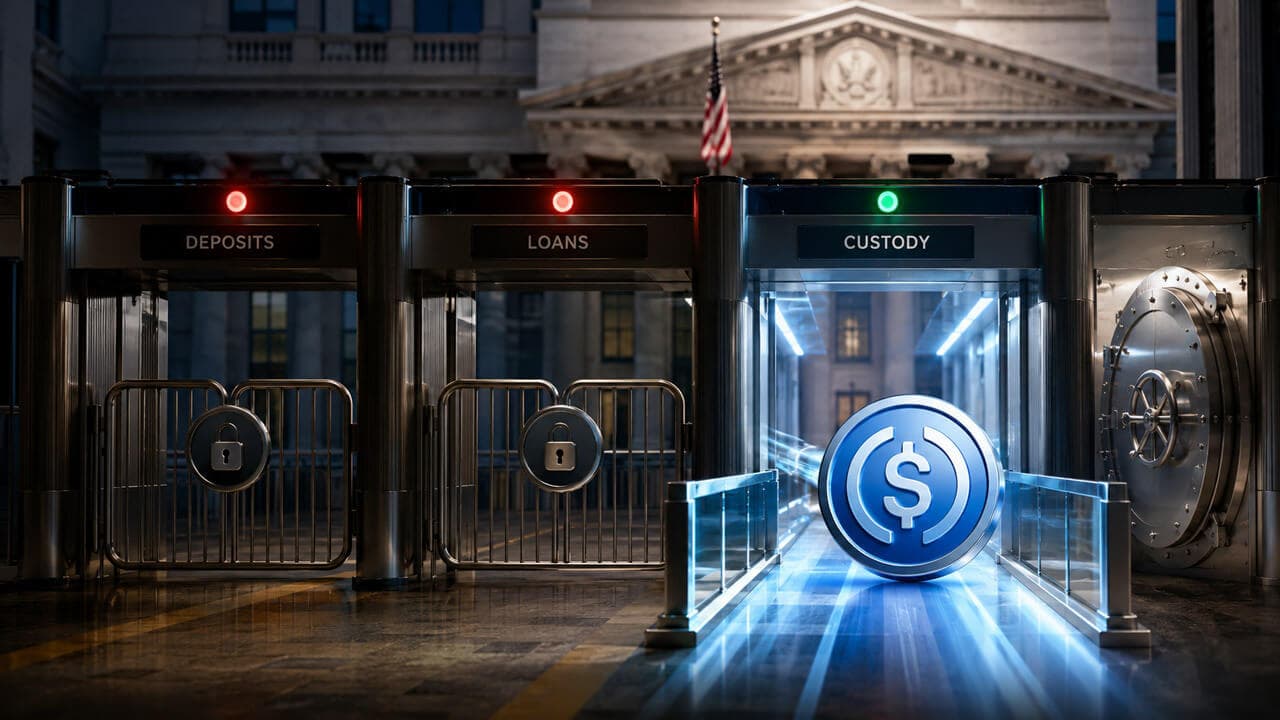
Circle National Trust will open with custody for Circle and its affiliates, while custody for select institutions and USDC reserve management remain future possibilities. Circle received approval from the OCC on July 10 to establish a bank called Circle National Trust. That does not give the USDC issuer the powers most people associate with a commercial bank. The national trust bank cannot accept ordinary deposits, make loans, offer checking or savings accounts, or provide FDIC-insured retail banking services. The decision is final, unlike the OCC’spreliminary conditional approvalfrom December 2025, but its approved business remains centered on fiduciary custody. Circlesaidthe bank’s legal name will be First National Digital Currency Bank, N.A., operating as Circle National Trust. Upon opening, it will provide fiduciary digital-asset custody for Circle and its affiliates under direct OCC supervision. That is the only service Circle has confirmed for the bank’s opening. Circle said the bank may eventually provide custody directly to a limited number of institutions, focusing on banks and other regulated financial organizations, if demand warrants expansion. Managing the USDC reserve is also a future capability rather than a service that arrives with the charter. Circle has not disclosed when the bank will open or what additional operational steps must occur before reserve management moves inside it. The charter’s strategic value lies in greater control over the infrastructure supporting a stablecoin with amarket capitalization of about $73.3 billion. A federal charter would let Circle bring custody, and possibly reserve management, under one roof instead of relying as heavily on outside firms. The company has not said what that might save or whether it plans to change its current partners. The charter gives Circle a federal fiduciary framework that competing stablecoin issuers may find difficult to match quickly. That could help when banks and other regulated firms decide which digital-dollar infrastructure they are willing to use. It does not automatically deepen USDC liquidity or place the token in more wallets, exchanges and payment products. Those distribution advantages remain contested asOpen USD recruits major partnersand challenges Circle’s issuer-led economics. The charter also carries political friction. TheIndependent Community Bankers of Americaargued during the application process that national trust charters can provide nonbank fintechs with bank-like benefits without the full capital and consumer-protection framework that applies to insured commercial banks. The OCC nevertheless granted final approval. The next tests are operational: when Circle National Trust opens, whether outside institutions demand its custody service, and whether USDC reserve management is later brought under the trust bank. Until then, Circle has gained federal supervision for custody—not the deposit-taking and lending powers implied by saying it simply “became a bank.”
Discussion about this post
No comment yet
Be the first to share your opinion!