
News
Platform news and market context
News
Platform news and market context
Digital Asset SPAC Postpones Merger Vote, Placing $50M Lifeline for Critically Undercapitalized Old Glory Bank in Jeopardy
Digital Asset Acquisition Corp. has delayed a shareholder vote on its merger with the parent of Old Glory Bank, which faces a significant capital shortfall and is relying on a minimum $50 million cash injection from the deal to continue operations.
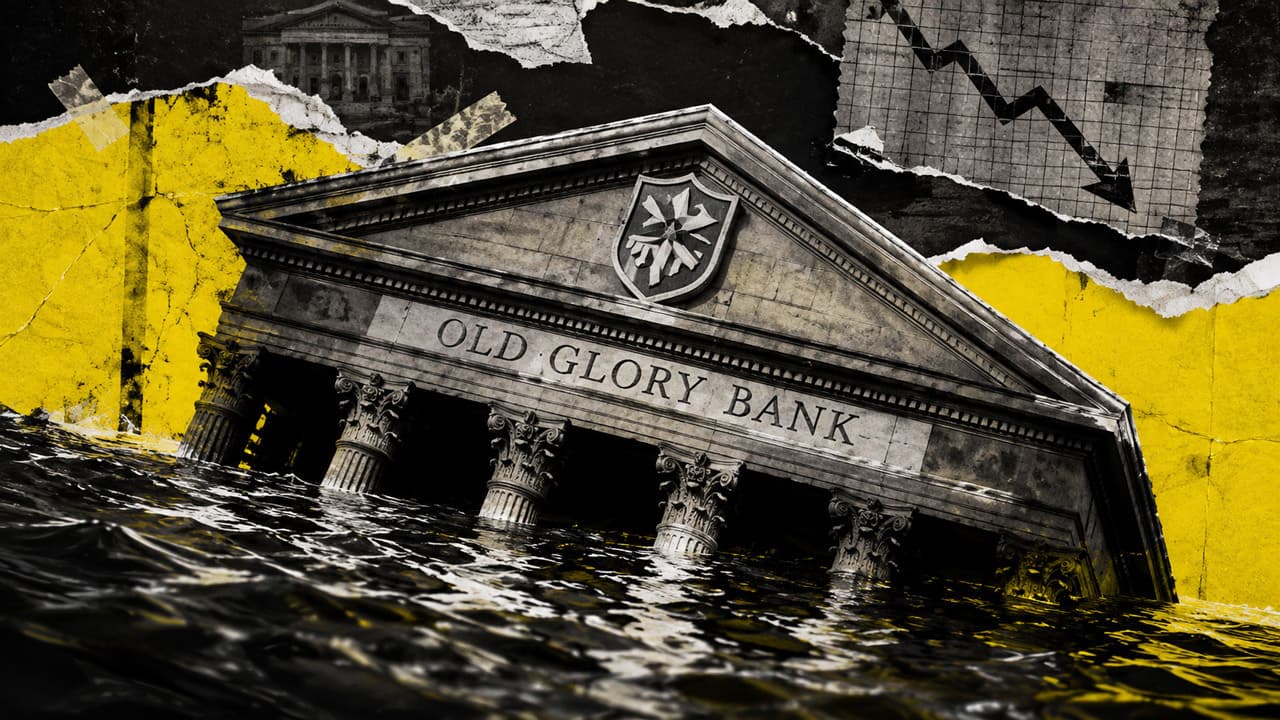
Merger Vote Delayed Amid Financial Uncertainty
A special purpose acquisition company, Digital Asset Acquisition Corp. (DAAQ), has postponed a crucial shareholder vote on its proposed merger with the parent company of regulated bank Old Glory Bank. The meeting, originally scheduled for July 31, is now set for 10 a.m. Eastern Time on August 14.
The initial meeting date was just two days after the July 29 deadline for shareholders to redeem their shares. In a July 31 filing, DAAQ stated it would keep soliciting proxies for the vote but did not provide a reason for the delay.
This postponement does not automatically give investors another chance to redeem their shares. According to DAAQ's final prospectus, investors could cancel a redemption request up until the deadline; afterward, any withdrawal requires the company's consent before the deal closes. The filing did not specify whether DAAQ has permitted any such post-deadline withdrawals.
Old Glory Bank's Precarious Capital Position
The deal centers on Old Glory Holding Company, whose subsidiary bank was already below two separate capital thresholds as the voting period began. The final prospectus revealed that as of June 29, the bank's Tier 1 leverage ratio fell below the standard 4% threshold for being considered "adequately capitalized." This placed Old Glory in technical noncompliance with a covenant in the merger agreement, though the company deemed this noncompliance to be nonmaterial, the filing notes.
A far stricter requirement stems from a May 2024 consent order issued by the Federal Deposit Insurance Corp. and the Oklahoma State Banking Department. This order mandates a 14% Tier 1 leverage ratio for as long as it is active. It also imposes requirements for regulator-approved capital and business plans, as well as prior consent for any dividends and bonuses.
Furthermore, being undercapitalized subjects the bank to prompt-corrective-action rules, which place restrictions on its growth, capital distributions, acquisitions, new branches, and new business lines.
The holding company’s own consolidated financial disclosures state that its current capital is not anticipated to be sufficient to cover operating losses and satisfy minimum regulatory capital requirements over the next 12 months. This situation, the disclosure warns, raises "substantial doubt about its ability to continue as a going concern." While management identifies the cash infusion from the merger as a potential solution, it also cautions that the deal's closing is not guaranteed, as it is contingent on external parties and market conditions. This warning does not constitute a declaration that the bank is insolvent or on the verge of closure.
A Murky Path to $50 Million
The merger agreement stipulates a minimum of $50 million in closing aggregate cash. This total is calculated from the SPAC's trust cash left after redemptions, any PIPE (private investment in public equity) proceeds that are actually received, and funds to be received from any other transaction financing. The party that benefits from this condition has the right to waive it through a signed written agreement where legally permissible.
As of March 31, DAAQ reported holding $178.58 million in trust securities and having 17.25 million redeemable public shares. This historical figure, however, does not reflect the amount that will be available when the deal closes. The filing announcing the postponement did not disclose the number of shares redeemed in July or the amount of cash remaining in the trust.
Compounding the uncertainty, the July 7 prospectus indicated that no PIPE or other forms of transaction financing had been secured or entered into. A separate filing from June mentioned that DAAQ planned to pursue non-redemption agreements, but the attached form did not list any executed agreements with investors or specify any committed share amounts.
Pending Approvals and Unanswered Questions
The timeline for approval also remains ambiguous. The final prospectus noted that an application with the Federal Reserve was still pending. A closing condition for the deal is the approval of the combined company's initial listing on Nasdaq. The July 31 filing made no announcement regarding either approval, although its silence does not confirm their current status.
With the delay, DAAQ gains two more weeks to secure shareholder votes, but the financial landscape of the deal remains opaque. For investors to assess whether the merger can meet the crucial $50 million closing condition, they will need to see the final redemption figures and any firm funding commitments. A fresh capital ratio is also needed to understand the full extent of Old Glory Bank’s financial shortfall.
Discussion about this post
No comment yet
Be the first to share your opinion!