
News
Platform news and market context
News
Platform news and market context
Despite $48M in Redemptions, 21Shares' Ethereum ETF Ended June with 86% of its ETH Staked
According to an August 14 filing from 21Shares, its TETH Ethereum ETF processed $48.4 million in redemptions during the first half of 2026, yet concluded the period with 86.42% of its Ether holdings locked in staking, highlighting a potential timing constraint for future withdrawals.
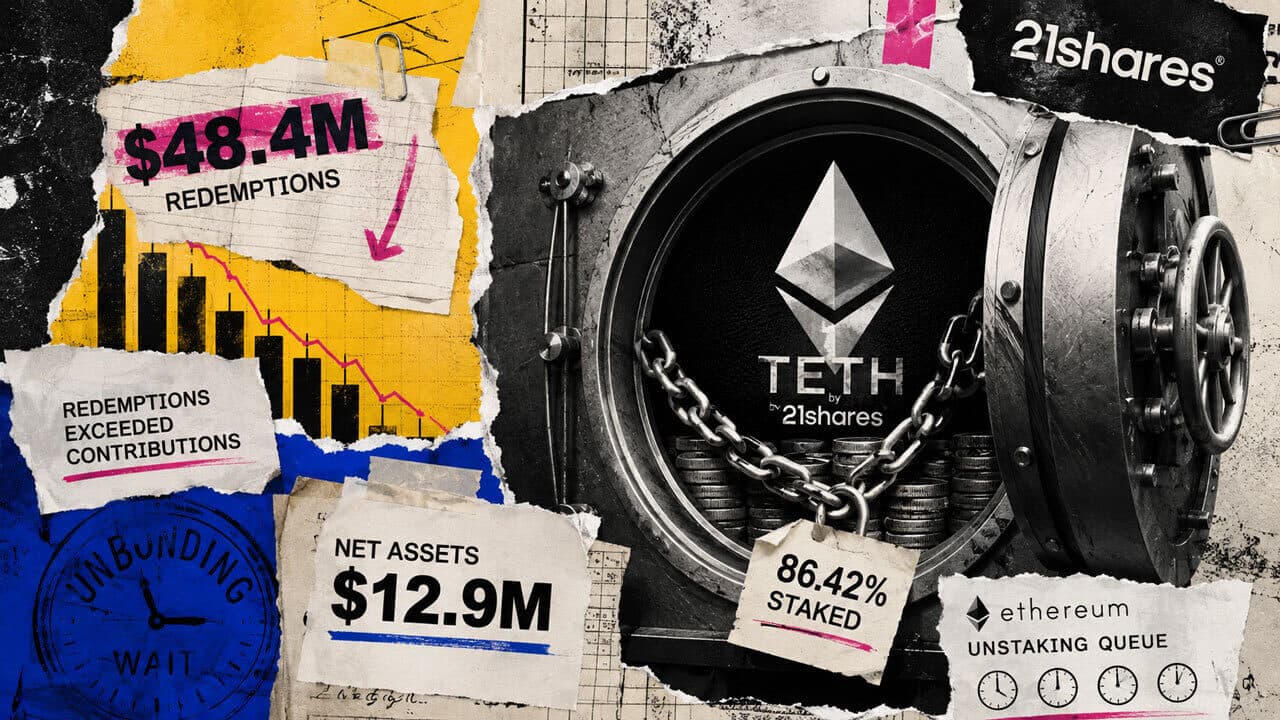
A quarterly filing on August 14 revealed that the 21Shares Ethereum ETF, which is traded under the ticker TETH, processed $48.4 million in redemptions in the first half of 2026. The fund concluded the month of June with 86.42% of its Ethereum holdings staked.
While the redemption total reflects transactions that have already been completed, the high staking ratio as of June 30 exposes any future settlements to potential delays associated with the timing of Ethereum's unstaking process.
Financial Performance and Redemptions
For the six-month period ending on June 30, distributions from TETH redemptions totaled $48.426 million. In contrast, contributions for new shares amounted to $42.174 million. Based on the filing's unrounded figures, redemptions surpassed contributions by $6.251 million.
To facilitate these cash redemptions, the trust sold 21,125.2745 ETH for $48.426 million. The filing confirms the successful completion of this activity, with no mention of any failed, delayed, or suspended orders during the period.
The significant redemptions contributed to a sharp decline in the fund's financial position. The fund's net assets decreased from $31.298 million at the close of December to $12.917 million by June 30. This change was driven by several factors:
- Shares outstanding fell from 2.11 million to 1.64 million.
- The reference price for ETH dropped by 46.89%.
- The trust incurred a realized loss of $12.769 million on the ETH sold to cover redemptions.
- Consequently, the net asset value per share fell from $14.83 to $7.88.
Staking Concentration and Liquidity Risk
At the end of the quarter, the trust held a total of 8,185.4684 ETH. Applying the reported 86.42% staking ratio suggests an approximate balance of 7,074 ETH in staking and 1,112 ETH that was unstaked. It is important to note that these quantities are derived from a rounded percentage. The balance sheet detailed in the filing is current as of June 30.
This quarter-end staking figure was substantially higher than the fund's average exposure throughout the reporting period. The fund’s daily staking average was 31.64% for the second quarter and 27.32% for the entire six-month timeframe.
The high concentration of staked assets introduces a timing challenge for handling future TETH redemptions. The trust explicitly states that staked ETH is subject to a variable unbonding period during which it cannot be moved or traded. It also warns that such temporary lockups or transfer restrictions could impede its capacity to fulfill redemption requests.
Redemption orders can only be placed directly with the trust by authorized participants, who must do so in blocks of 10,000 shares or multiples thereof. In contrast, ordinary investors typically trade individual TETH shares on the open exchange.
Market Context and Future Implications
These activities occurred against a volatile background for the broader spot Ethereum ETF market. In June, CryptoSlate reported that these products had experienced four consecutive weeks of withdrawals, amounting to over $870 million. A single day of $19.3 million in inflows briefly interrupted what was otherwise a 17-day streak of outflows.
Should a new wave of TETH redemptions occur, it would rigorously test the fund's liquidity. The outcome would depend on the size and timing of authorized-participant orders versus the amount of ETH available outside of staking at that moment, as well as the speed at which additional ETH could be unstaked. The 86.42% staking ratio at the end of the quarter underscores the fund's concentrated exposure to this timing trade-off. While the filing records the successful completion of first-half redemptions, it also documents this prospective liquidity constraint.
Discussion about this post
No comment yet
Be the first to share your opinion!